Luxar · 88 scenes · streamed from Cloudflare R2

Look at
the data.

A gallery of demos built with Luxar: nD scientific scenes — galaxies, embryos, connectomes, embeddings — rendered in your browser straight from object storage. Nothing to install.

1.2Belements
88scenes
11domains
7.30 GBhosted
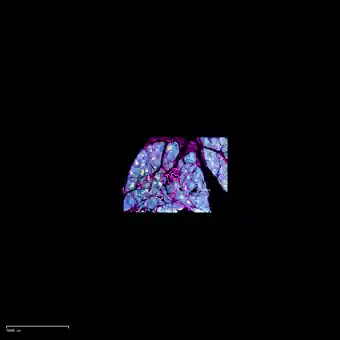
open in viewer → 3D Kidney Multichannel LayersG. Buckley 2018 (scikit-image kidney)CC0 1.0 Microscopy157K splats
open in viewer → Cells3D Multichannel MicroscopyAllen Institute for Cell Science (scikit-image cells3d) Microscopy100K splats
open in viewer → 4D Neuromast (2-channel timelapse)Jacobo lab, CZ Biohub San FranciscoCC BY 4.0 Microscopy22.8M splats
open in viewer → Storm 3D MicrotubulesSieben 2019CC BY 4.0 Microscopy5.3M splats
open in viewer → Drosophila Gastrulation (light-sheet)Royer et al. 2016CC BY 4.0 Microscopy400K splats
open in viewer → 3D FlyLight MCFO NeuronsMais et al. 2024CC BY 4.0 Microscopy1.2M splats
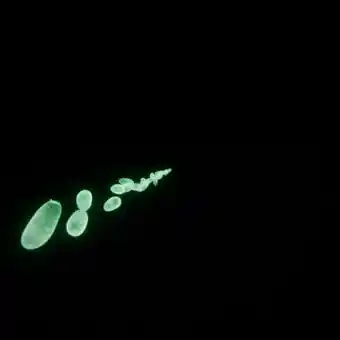
open in viewer → Multichannel Mouse BlastocystBlin et al. 2019CC BY 4.0 Microscopy54K splats
open in viewer → 4D Drosophila Embryogenesis (500 timepoints)Royer et al. 2016CC BY 4.0 Microscopy166.4M splats
open in viewer → Mouse Blastocyst DAPI NucleiBlin et al. 2019CC BY 4.0 Microscopy15K splats · 36 vertices
open in viewer → 6D Kidney Multichannel TogglesG. Buckley 2018 (scikit-image kidney)CC0 1.0 Microscopy157K splats
open in viewer → Human Pancreas (CODEX, 12 channels)Björklund et al. 2023CC BY 4.0 Microscopy71.9M splats
open in viewer → 4D C. elegans Nuclei TrackingSantella et al. 2022CC BY 4.0 Microscopy130K points · 2.6M splats · 4.3M vertices
open in viewer → 4D Zebrafish Gastrulation (endoderm)Aanstad 2018CC BY-SA 4.0 Microscopy3.4M splats · 192 vertices
open in viewer → Splat Culling Study (Drosophila gastrulation)Royer et al. 2016CC BY 4.0 Microscopy1.6M splats
open in viewer → Milky Way Dust (Gaussian splats)Leike et al. 2020 Astronomy1.8M splats
open in viewer → Quantum Atomic Orbitals Synthetic138K splats
open in viewer → Cells3D IsosurfacesAllen Institute for Cell Science (scikit-image cells3d) Microscopy537K vertices · 1.1M faces
open in viewer → Human White-Matter TractographyYeh 2022CC BY-SA 4.0 Medical9.3M vertices
open in viewer → Single-Cell 3D Genome (Dip-C)Tan et al. 2018 Genomics555K vertices
open in viewer → Zebrahub MultiomeKim et al. 2024 Embeddings189K points
open in viewer → Zebrahub Multiome Peak UMAPKim et al. 2024 Embeddings9.0M points
open in viewer → Esm3 Protein LandscapeUniProt/Swiss-Prot; embeddings by EvolutionaryScale ESM C, 2024CC BY 4.0 Embeddings2.3M points
open in viewer → ESM Protein Stories — ten guided tours of the Swiss-Prot landscapeUniProt/Swiss-Prot; embeddings by EvolutionaryScale ESM C, 2024CC BY 4.0 Embeddings1.2M points · 6K vertices · 13K faces
open in viewer → ESM Protein Universe — twelve stories across 7.7 million protein clustersESM Atlas cluster map (Candido et al. 2026)3D map shown with permission Embeddings18.6M points · 6K vertices · 12K faces
open in viewer → Huri InteractomeLuck et al. 2020 Networks16K points · 207K vertices
open in viewer → Protein-Interaction Flow FieldLuck et al. 2020 Networks8K points · 2.2M vertices
open in viewer → Galaxy Simulation Synthetic29.7M points
open in viewer → Spiral Galaxy Synthetic500K points
open in viewer → Mandelbulb Fractal Synthetic1.2M points
open in viewer → Ocean Synthetic1.5M points · 1.2M vertices
open in viewer → Collision Synthetic2K points · 38K vertices
open in viewer → Hilbert Curve 3D Synthetic300K vertices
open in viewer → Lorenz Attractor Synthetic500K points
open in viewer → Forest Synthetic13K points · 187K splats · 1.3M vertices · 131K faces
open in viewer → Particle Collision (animated) Synthetic68K points · 4.7M vertices
open in viewer → Rainbow Sphere Synthetic400K points
open in viewer → Fractals 4D Synthetic44.5M points
open in viewer → Turing Patterns Synthetic78.6M points
open in viewer → Cloud Synthetic2.7M points
open in viewer → Quasicrystal Synthetic500K points
open in viewer → Cubic Array (depth of field) Synthetic1.5M points
open in viewer → nD Transforms Test Bench Synthetic11K points · 22 vertices

How it works

Each scene is a chunked .luxar.zarr store held on object storage. The viewer is deployed once and takes its dataset as a URL — ?src= — so every scene here is the same build pointed somewhere new. Nothing is downloaded up front: the viewer fetches only the chunks the current view needs.

What you're looking at

Points, lines, Gaussian splats and meshes, from a few hundred elements to tens of millions — light-sheet microscopy, connectomes, cosmology, single-cell embeddings. Scenes are nD: use the dimension controls to step through time, channels or any other axis a dataset carries.

The code

Luxar is open source at github.com/royerlab/luxar. Every scene here is produced by a script in packages/luxar/src/luxar/demos — each one runnable with luxar demo run <name>.